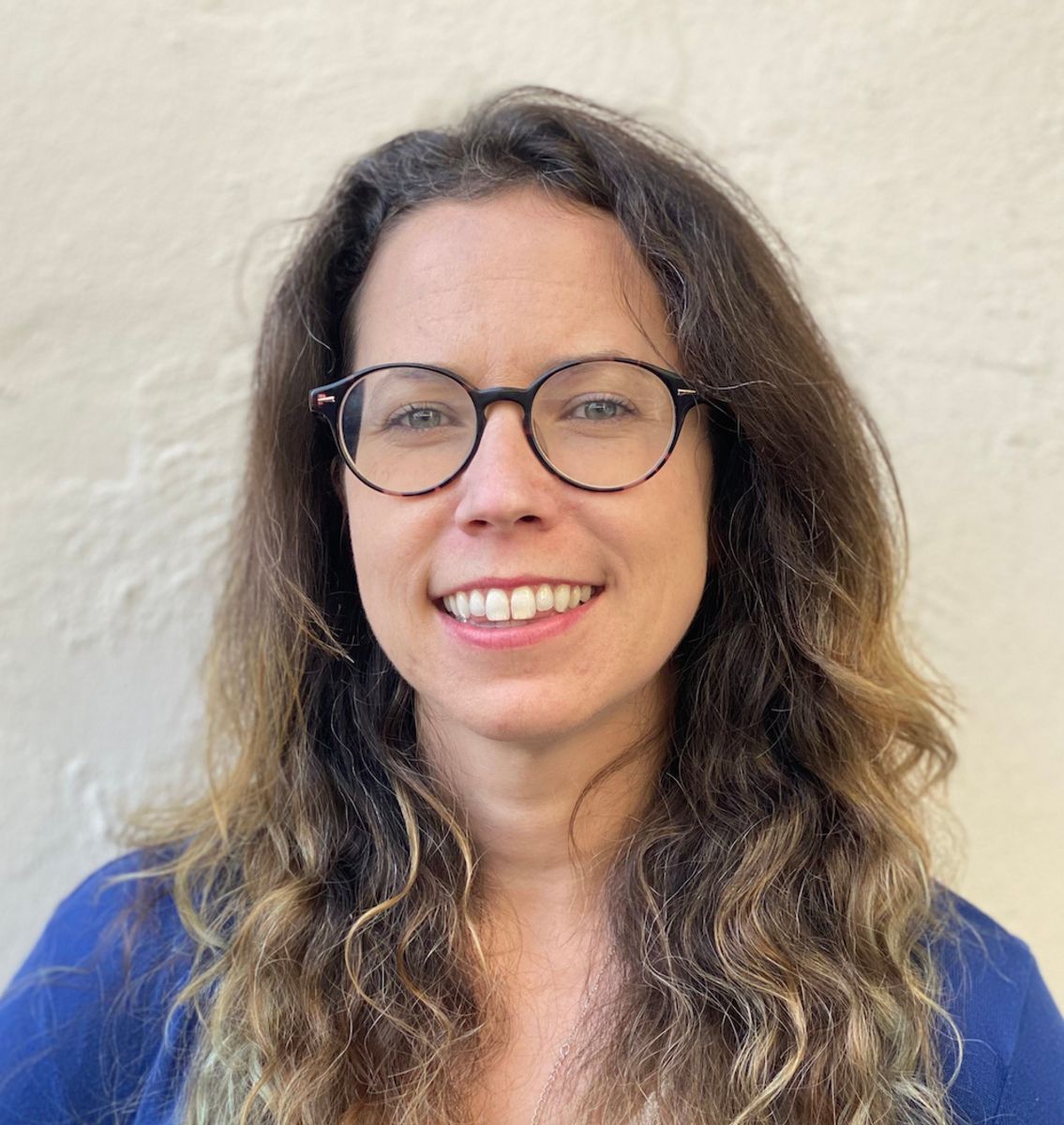

I’ll be honest: short story collections are usually not my thing. But I love T.K. Rex’s The Wildcraft Drones, and not just because it has great stories and great writing. I like it because of how each tale carries us through a specific future. That future isn’t idealized — bad, problematic things happen! — but good things happen as well, and it shows us how even when things are dark, life can still hold wonder, joy, and love. In that way, The Wildcraft Drones’ solarpunk setup reminded me of Automatic Noodle by Annalee Newitz, which isn’t surprising given Newitz wrote a blurb for Rex’s book.
I talked with Rex about their short story collection, including how the idea for those cute drones came to be, how the idea of rewilding San Francisco took root in their imagination, and how the stories are told from such differing points of view (including more than one drone’s). It was a fun, interesting conversation in which you’ll learn about planetary scale intelligence, why wildcraft drones have tentacles, and other things.
Interested in more book recommendations from me? Check out my online bookshop! Buy some weird and/or braintwisting reads and also support Tube Talk (I get a small stipend per sale).

This interview has been lightly edited for clarity and brevity.
How did you first get the idea for the rewilding of San Francisco?
I was on a train from Baltimore to Florida, and I had just taken my first ecology class, and I was realizing for the first time how much work has already been done in the environmental movement, and how many people were working really hard. There’s this doom narrative I had also gotten very like caught up in — even though I was raised by environmentalists, I had this attitude that no one doing anything and I realized that actually a shitload of people are working really hard. It really changed my mindset, and I spent the whole two and a half days in the café car, writing this vignette about what if we rewilded all of this landscape out here that's actually food producing with drones harvesting our food from trees rather than our current questionable agricultural practices?
That vignette isn’t in the collection because there's a lot of problems with it, namely what about the people who are living in rural areas? If you're going to rewild everything for this, you’re going to have to relocate people, and that's messed up. And then that became one of the central things of this world, as I started building it out and doing research.
I based it in Northern California because that’s where I live, and I ended up learning so much about California's native plants and food forests and the whole history of colonization in California, which was hideously depressing. I first wrote it as a novel, which turned into a novelette published in Asimov’s. And I wrote so many other stories in that world, which got published elsewhere. One thing I know how to do, it's just stubbornly keep going on a random obsession.

Credit: T.K. Rex
And what about the drones?
Here's the thing: our industrial agriculture is so tied to the industrial machinery, and those are big-wheeled machines whose wheels take up a lot of ground space. So I was like, what if we didn't need to use that ground for the wheels and we could have stuff harvested from the air? We could also do it multi-level, so we could have trees and then undergrowth, and have all of those be different food producing plants. It turns out that's also a whole other science of food forests and agroforestry, and I liked exploring the idea of this through the drones, even while the techno-optimism of it was increasingly problematic. That tension became something for me to explore and to play with, and to not try to write an easy utopia, but to write something that was a possible future in its own way, and trying to deal with its own challenges in its own way. And then the consumer relationship between technologies often can run in parallel, and that also became cool to think about.
One thing I liked is how different the characters are in each story. They’re from different walks of life, from a former tech bro to those who are unhoused or living illegally in the rewilded land, to the rangers whose job it is to remove the people living in the rewilded land, to sentient drones. Their perspectives run the gamut in this world you’ve created, and I’d love to hear how you chose the characters for your stories.
I knew as soon as this was going to be a short story collection that I wanted a lot of very different perspectives. Each one came about from something that I wanted to explore, idea-wise, and the character who seemed best situated to tell that story emerged. Sometimes that was a drone, sometimes that was a ranger.

Drone dinosaur print, on sale at Cafe Suspiro in San Francisco
Credit: T.K. Rex
I also want to talk about the comics section in the book. I didn't know you were also an artist!
I sometimes do art, I went to art school. But the origin me drawing the drones came after I had surgery. My brain was all fucked up from the anesthesia and I was not in a mental space for several weeks to be able to focus on writing. So I was just drawing my stuff and exploring how the drones might look. And I was like, fuck it: What if they're tentacle robots? And when I got the collection together and sent it to my publisher. I asked if some drawings would be fun, and I also had this story that I had tried to write, and it kept just wanting to be a picture of some drones all mushed together as a big dinosaur. So made it a visual story, and then I did several others that were just one frame, little visual stories, because some things just are better that way. It turns out writing isn't always the best way to tell a story.
Speak your changes, what you did, and why. Wispr Flow formats it into a clean PR description with file references intact. 4x faster than typing. Try Wispr Flow free

Without getting too much into spoilers, we go from basically our near future to several thousand years from now. Did you know you were going to go that far out when you started?
No, when I first started with the novel version, I did a very stereotypically American science fiction writer thing and just set it as as far ahead in the future as the founding of the country was in the past. I had done a detailed timeline, where I was mapping out all the different events that had to happen along the way at some point. I gave that up a while ago, but the different stories that take place at the different times were just the result of me thinking a lot about what would be happening that far out. It very much came out of a paper I had come across, “Intelligence as a planetary scale process.” It made me thing of a mature techno-sphere and the idea that, if you were to look for signs of an advanced civilization that had progressed beyond our era, you might be looking for what they call a mature techno-sphere, which is one in which technology has evolved to work in a more collaborative and sustainable way with the other parts of our world, the biosphere, the hydrosphere. And so the last story in the collection was my chance to explore that concept from the point of view of this world.
Do you currently have any plans to write more in this world?
Not at the moment, but I secretly hope that an agent will be like, “You should write a novel in this world, and then I'll rep you for it,” and then I'll say, “Yes.”
Thanks for reading! Please share this post with a friend and subscribe, if you haven’t already! A monthly subscription is only $4.99 and lets you comment on articles, receive exclusive posts, and more!